





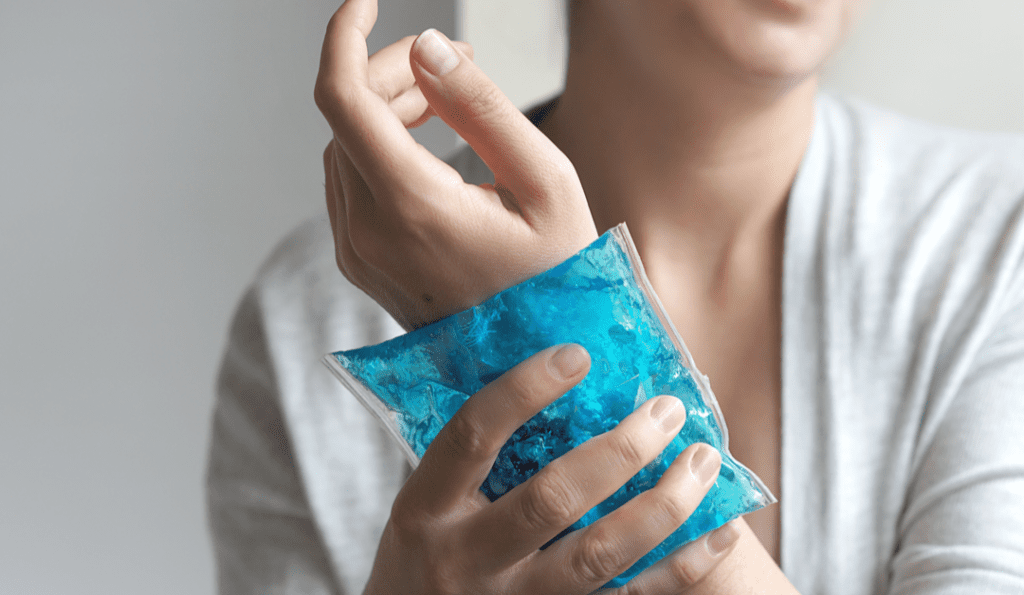
As soon as an injury happens, you almost instantly receive the advice to “put some ice on it”. Ice is a tried-and-true tool for reducing pain and swelling. What is the best way to ice an injury? From gel ice packs to a variety of homemade options, there are numerous possibilities.
The Best Ice Packs For Injuries
There are a number of ice bags and ice substitutes available on the market today. Athletic trainer, Whitney Murray, ATC, prefers the standard old-fashioned icing method. “All you need is any type of plastic bag that can hold ice without leaking. I prefer to use crushed ice because it conforms to various body parts and can be easily secured to the body; however, any type of ice will work.”
Tip: If ice is not available, a bag of frozen peas or corn will work— and can be refrozen and used again.
Icing Methods
- Gel ice packs: These ice packs, like crushed ice, are easily molded to the injured body part. Some benefits to these packs include: available at most major retailers, are reusable, and can often be used for heat later in the healing process.
- Homemade ice packs: There are also some handy ways to create your own ice packs with items you have in your cabinets. If you are in a bind, use these items to make your own cold pack.
- Salt is a cheap and easy way to make a cold pack. Salt is an ingredient that keeps water from freezing completely. Using a sealable bag, add 2 tablespoons of salt to 2 cups of water. Place in freezer for several hours.
- Corn Syrup makes a great gel pack substitute. Simply pour some corn syrup into a sealable bag and then leave it in the freezer. It stays flexible and can be molded around ankles, knees, wrists, or any sore areas.
- Sponge cold packs are made with a clean sponge, water, and sealable bag. Soak the sponge, place it in a bag; leave it in the freezer. This homemade option remains hard and firm with no flexibility until it warms up.
When To Seek Treatment
As soon as possible after an injury, you can relieve pain and swelling to promote healing with RICE—Rest, Ice, Compression, and Elevation. Many minor injuries will be improved within 3 days of resting the injured part. Listen to your body: a rule of thumb is to always use your best judgment. However, if you are experiencing intense pain, immediate care may be the best option.