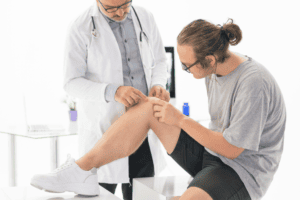





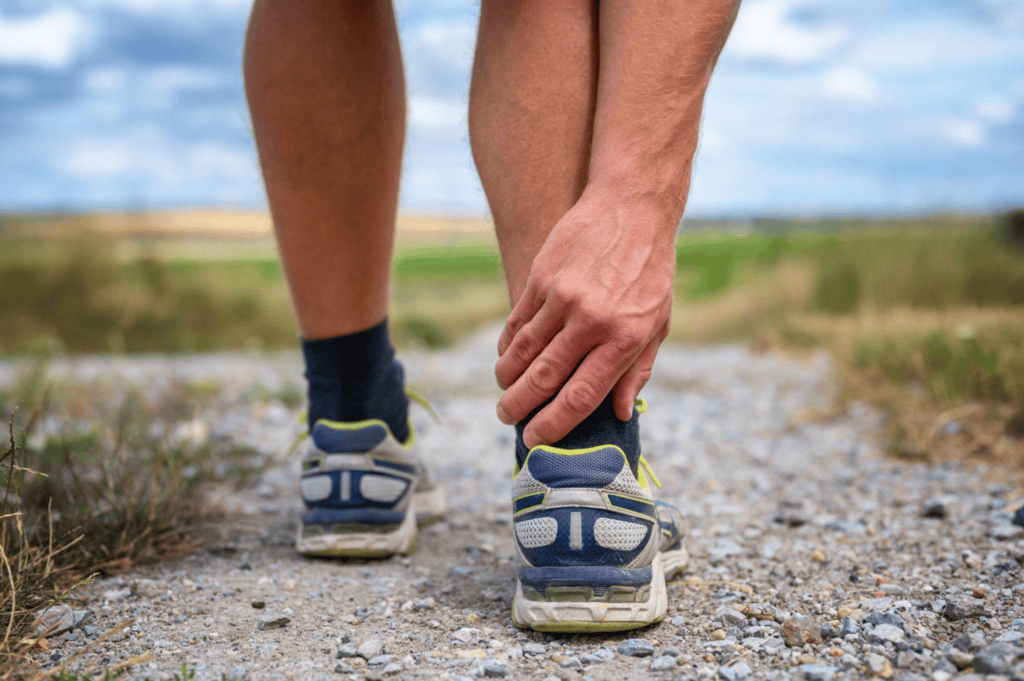
If the back of your heel feels stiff and sore with your first steps in the morning, or it flares up during summer runs and pickleball games, your Achilles tendon may be the culprit. Achilles tendonitis is one of the most common causes of heel and ankle pain in active adults, and it often shows up when summer activity ramps up faster than the tendon can handle. The good news is that most cases improve with the right care, especially when you start early.
What Is Achilles Tendonitis?
Achilles tendonitis (also spelled Achilles tendinitis) is inflammation of the Achilles tendon, the strong band of tissue that connects your calf muscles to your heel bone. This tendon absorbs tremendous force every time you walk, run, or push off the ground. When it is overloaded, the fibers become irritated and inflamed, leading to Achilles tendon pain, stiffness, and swelling at the back of the heel.
Why Achilles Tendonitis Flares Up in the Summer
Summer in Arkansas is a common time for Achilles tendonitis. A sudden return to running, hiking, tennis, or pickleball, often after a quieter winter, loads the tendon faster than it can adapt. Hills, hard pavement, and unsupportive summer shoes add even more strain. The tendon simply is not ready for the jump in activity.
What Causes Achilles Tendonitis?
Achilles tendonitis is almost always an overuse problem rather than a single injury. Common contributors include:
- A rapid increase in running or jumping activity without a gradual build-up
- Tight or weak calf muscles that put extra pull on the tendon
- Worn-out or unsupportive footwear
- Running on hills or hard surfaces
- Naturally tight tendons or flat feet that change how force travels through the ankle
How to Tell If Your Heel Pain Is Achilles Tendonitis
The most telling sign of Achilles tendonitis is pain and stiffness along the back of the heel, especially with your first steps in the morning. Other clues include:
- A sore Achilles tendon that warms up with activity but aches afterward
- Tenderness or swelling a couple of inches above the heel
- Stiffness that eases as you move but returns after rest
- Pain that worsens after climbing stairs or sprinting
A sudden, sharp pop at the back of the ankle followed by weakness can signal an Achilles tendon rupture, which needs urgent evaluation by a foot and ankle specialist.
How to Treat Achilles Tendonitis at Home
Mild cases may respond well to consistent Achilles tendonitis treatment at home:
- Rest from high-impact activity and switch to low-impact options like swimming or cycling
- Ice the tendon for 15 to 20 minutes after activity
- Gentle calf and Achilles stretches, plus heel raises as pain allows
- Supportive shoes, sometimes with a small heel lift to reduce tendon strain
- Over-the-counter anti-inflammatories as directed for short-term relief
Most mild cases improve within a few weeks. Pain that lingers or worsens needs a professional look.
When to See a Foot and Ankle Specialist in Arkansas
Consider scheduling with a foot and ankle specialist in Arkansas if:
- Pain has not improved after a few weeks of rest and home care
- Swelling or stiffness is getting worse instead of better
- You felt or heard a pop, or the ankle feels weak (possible rupture)
- The problem keeps returning every time you become more active
Catching Achilles tendonitis early often means simpler treatment and a faster, more reliable return to activity.
Treatment Options at OrthoArkansas
Our foot and ankle specialists take a comprehensive approach to Achilles tendon pain that looks beyond the symptoms to why the tendon became overloaded. Depending on your evaluation, care may include:
- Physical therapy focused on calf strength and Achilles loading exercises
- A structured, gradual return-to-activity plan
- Heel lifts, orthotics, or footwear changes to reduce strain
- Bracing or temporary immobilization for more stubborn cases
- Advanced options for stubborn cases, such as platelet-rich plasma (PRP) injections, therapy, tendon debridement to remove damaged tissue, or surgical repair
We also have in-house MRI and CT centers for advanced imaging when we need a closer look to assess the tendon or rule out a tear.
Why Choose OrthoArkansas for Foot and Ankle Care in Arkansas?
OrthoArkansas brings together fellowship-trained, board-certified orthopedic specialists, in-house physical therapy, and in-house MRI and CT centers, with clinic locations across Arkansas, including Little Rock, North Little Rock, Conway, and Bryant. That means diagnosis, treatment, and recovery are coordinated within one practice, with no unnecessary referrals or long waits. Whether your Achilles pain is brand new or has nagged you for months, our team builds a plan to get you back to the activities you love.
Don’t Let Achilles Pain Sideline Your Summer
You should not have to push through heel pain on every run or walk. Schedule an appointment with a foot and ankle specialist at OrthoArkansas and get a clear diagnosis and a plan that works.
Find a Foot & Ankle Specialist Near You →
Frequently Asked Questions
How long does Achilles tendonitis take to heal?
Mild cases often improve within a few weeks of rest, stretching, and load management. More stubborn or long-standing cases can take a few months, especially if the tendon has been irritated for a while. Starting treatment early and following a structured plan gives you the best chance of a faster recovery.
What does Achilles tendonitis feel like?
Most people feel stiffness and aching along the back of the heel, worst with the first steps in the morning or after sitting. The tendon may feel sore or tender to the touch, warm up during activity, and ache more afterward.
What is the difference between Achilles tendonitis and a rupture?
Achilles tendonitis is inflammation and irritation that builds up over time. A rupture is a sudden tear, often felt as a sharp pop at the back of the ankle followed by weakness and difficulty pushing off the foot. A suspected rupture needs urgent evaluation.
What helps Achilles tendonitis?
Rest from high-impact activity, icing, gentle calf and Achilles stretching, supportive footwear, and a gradual return to activity all help. Physical therapy that strengthens the calf and loads the tendon properly is one of the most effective long-term treatments.
Can I keep running with Achilles tendonitis?
Running through Achilles pain usually makes it worse and can raise the risk of a more serious tendon injury. Low-impact cross-training like swimming or cycling lets you stay fit while the tendon settles, and a gradual, structured return to running is the safer path.
Does Achilles tendonitis require surgery?
The large majority of cases resolve without surgery through physical therapy, activity changes, and other conservative care. Surgery is reserved for cases that do not respond to a full course of non-surgical treatment, or for certain tendon tears.
When should I see a doctor for Achilles tendon pain?
See a foot and ankle specialist if pain lasts more than a few weeks, is worsening, or keeps returning, and seek prompt care if you felt a pop or the ankle feels weak. OrthoArkansas has specialists across Arkansas. This article is for general education and is not a substitute for medical advice.